Overview
Tankless vs. Conventional Tank Water Heaters
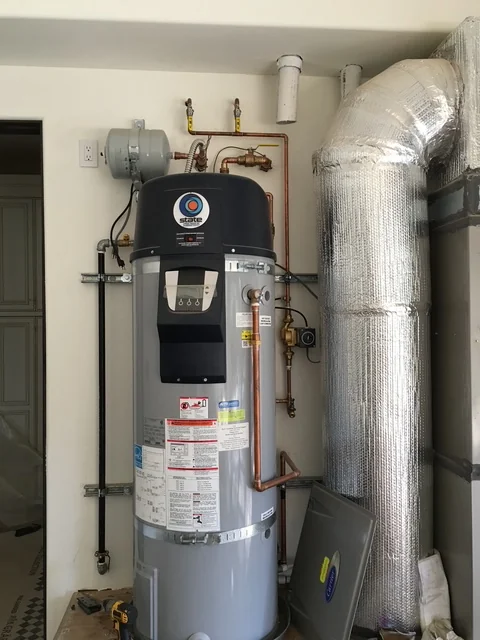
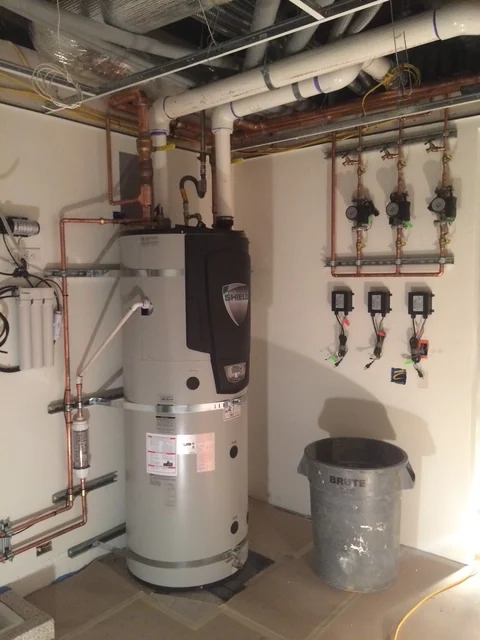
Choosing between a tankless unit and a conventional storage tank is the most important decision when replacing your water heater. Traditional tank systems store and continuously reheat 40 to 75 gallons of water 24 hours a day. While they provide a dependable, budget-conscious option for straightforward emergency replacements, they suffer from constant standby heat loss and can quickly run out of hot water during peak morning routines or back-to-back showers.
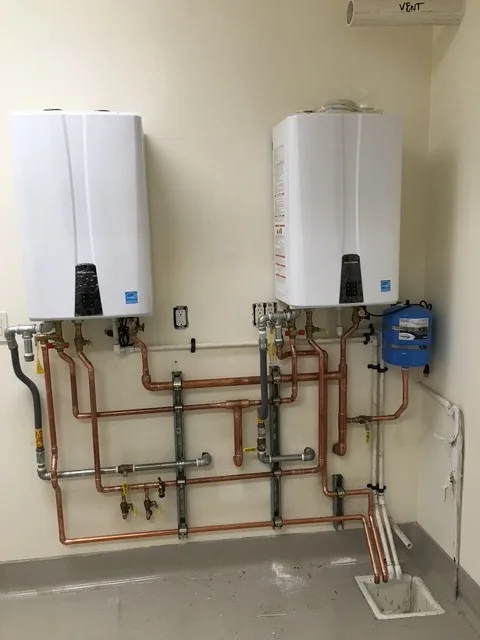
On-demand tankless water heaters (such as condensing Navien or Noritz systems) heat water instantly as it flows through high-efficiency heat exchangers only when a fixture is running. Because they eliminate standby energy waste, tankless systems deliver an endless supply of hot water while operating at up to 96% to 98% thermal efficiency. This cuts water-heating energy consumption by 25% to 40%, qualifies homeowners for regional Peninsula energy rebates, and boasts an operating lifespan of 20+ years—more than double that of a traditional storage tank.
Physical footprint is another key difference for San Francisco Peninsula properties. While standard storage tanks consume 9 to 16 square feet of valuable garage, closet, or basement floor space, wall-hung tankless systems mount cleanly on an interior or exterior wall. This compact profile frees up valuable floor space—an ideal advantage for tight utility closets, finished basements, and newly constructed Accessory Dwelling Units (ADUs).
Converting from a traditional tank to a tankless system requires professional plumbing engineering. High-capacity tankless units demand higher peak gas volume (often requiring an upgrade from 1/2-inch to 3/4-inch gas lines), dedicated direct-vent piping to exterior walls, and electrical service for digital controls. If your priority is an immediate, cost-effective replacement without modifying existing venting or gas infrastructure, a modern, seismic-strapped conventional tank remains a reliable workhorse. Daso Plumbing evaluates your home’s gas supply, venting pathways, and peak hot water demand to provide clear, fixed-price recommendations for either solution.